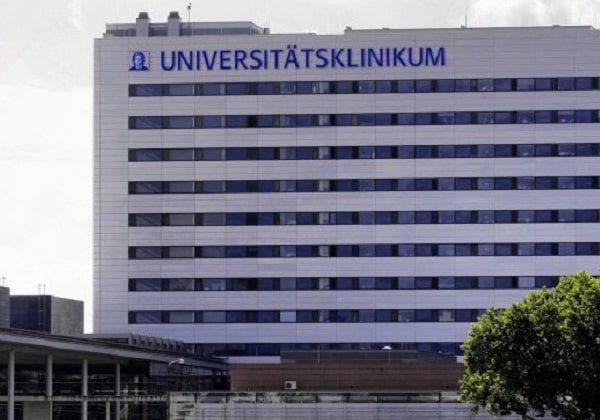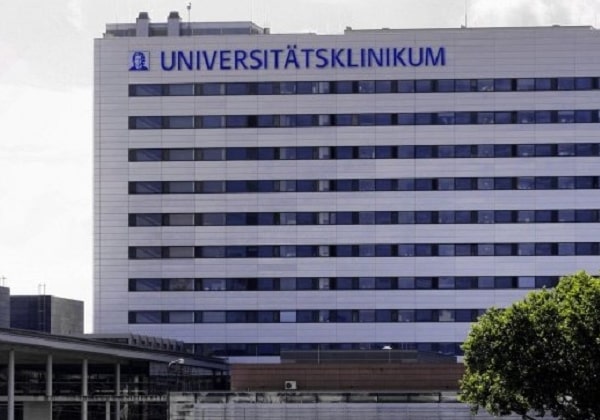


Frankfurt University Hospital
 Frankfurt am Main, Germany
Treatment of Angina pectoris with Angioplasty and stenting
- Initial consultation with the doctor
- clinical examination
- review of medical records
- laboratory tests:
- complete blood count
- biochemical analysis of blood
- lipid profile
- kidney function test
- metabolic status
- hormonal analysis
- cardiovascular disease risk markers
- general urine analysis
- ECG
- chest X-ray
- stress echocardiography
- graded exercise stress test
- myocardial perfusion scintigraphy (if indicated)
- coronary artery calcium (CAC) score by fast CT
- electron-beam computed tomography (EBCT)
- CT coronary angiography
- nursing services
- consultation with cardiologist
- consultation with related specialists
- symptomatic treatment
- cost of medicines
- pre-operative workup
- angioplasty and stenting
- post-operative analysis
- treatment by leading expert
- full hospital accommodation
- explanation of an individual treatment plan
- written prescription
Department of Cardiothoracic and Thoracic Vascular Surgery

Head of the Department
Prof. Dr. Thomas Walther

Department of Cardiothoracic and Thoracic Vascular Surgery at the Frankfurt University Hospital offers medicine at the highest level with excellent quality care of all diseases of the heart and thorax and the consistent use of minimally invasive techniques. In principle, the...
Read MoreAbout Frankfurt University Hospital
Frankfurt University Hospital is one of the oldest Hospitals in Germany with the most advanced and modern technical facilities. The Hospital has a special mandate to conduct research and teaching on the basis of excellent patient care in order to make progress in the fight against disease and disability and to train the doctors of tomorrow.
The Frankfurt University Hospital has more than 32 specialist departments of distinctive treatments, 20 research institutes, more than 1300 doctors and scientists and a staff of more than 4500 medical personnel. It has the capacity of around 1488 beds and the capability to treat an average of over 50,000 inpatients and above 400,000 outpatients annually.
The university hospital Frankfurt covers all areas of modern medicine, whereas its special competence lies in oncology, cardiovascular medicine, cardiac surgery, and neuroscience.
Quality and patient safety are top priorities for the University Hospital Frankfurt. This is continuously developed through comprehensive quality and risk management. The high regulatory and legal requirements in the healthcare sector results in a close interface to compliance management, to which the Executive Board has positioned itself in the compliance guideline.
Treatment of Angina pectoris with Angioplasty and stenting
Type: Inpatient
Duration: 7 Days
-
 Interpreter up to 7 hours
 -
 Translation of up to 3 pages
 -
 Visa support
 - Price: On Request